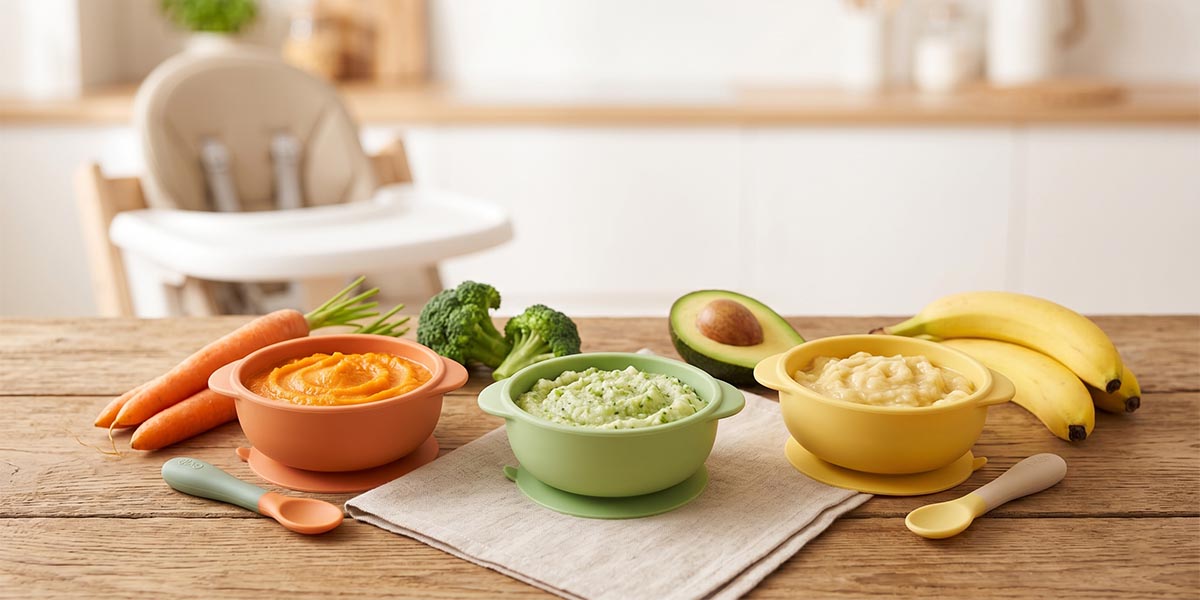
MPASI — complementary feeding alongside breast milk — is one of the most anticipated yet most anxiety-inducing milestones for parents. When should you start? What is and isn't allowed? What if your child refuses to eat? Allow me to answer these questions thoroughly.
When Is the Right Time to Start Solids?
WHO and the Indonesian Paediatric Society (IDAI) recommend starting complementary foods at 6 months of age, while continuing breastfeeding until age 2 or beyond. Starting solids before 4 months increases the risks of: an immature digestive system, food allergies, and reduced breast milk production.
Signs of readiness for solids (all three must be present, not just one):
- Stable head control and able to sit with a little support
- Loss of the extrusion reflex — no longer pushing out everything that enters the mouth
- Showing interest in food: reaching for or staring at adults' food
Three Key Nutrients That Must Be Present from Day One
This is the blind spot I encounter most often — parents focus on texture and variety but forget about nutrient density:
1. Iron — The Highest Priority
At 6 months of age, a baby's iron stores from birth are nearly depleted. Breast milk alone does not contain enough iron to meet the increased demand. Iron deficiency during this period affects brain development permanently and irreversibly.
Best sources: beef, chicken liver (extremely rich in iron!), and egg yolk. Serve them from the very first day of solids — don't wait for your child to "get used to" rice and vegetables first.
2. Animal Protein — Not Optional
Animal protein (meat, fish, eggs, chicken) contains the complete essential amino acids that cannot be replaced by plant protein from tofu, tempeh, or legumes alone. This protein is crucial for the growth of muscles, organs, and the immune system. Serve it every day, not just 2–3 times a week.
3. Good Fats — Nothing to Fear
The human brain is 60% fat. Fat from quality sources — avocado, extra virgin olive oil, egg yolk, coconut oil — is the primary fuel for a baby's brain development. Never give foods labelled "low fat" to babies and toddlers.
Solid Food Texture Guide by Age
| Age | Texture | Sample Menu |
|---|---|---|
| 6–8 months | Smooth puree, single ingredient | Pumpkin + chicken liver puree, brown rice porridge + beef |
| 8–10 months | Mashed, finely chopped | Soft steamed rice, minced meat, soft scrambled egg |
| 10–12 months | Soft finger foods, small pieces | Soft rice, banana pieces, tender steamed carrot |
| >12 months | Family foods | All nutritious foods from the family table (limit sugar & salt) |
Tips for Dealing with Food Refusal
Food refusal (known in Indonesia as GTM — "closed mouth movement") happens to nearly every parent, and it is not a sign that your child isn't hungry or doesn't like the food — it is a normal phase of sensory exploration. Here are my tips:
- Repeated exposure without pressure — research shows it takes 10–15 exposures before a child accepts a new food. Don't give up at attempt number 3.
- Avoid distractions (phones, TV) — babies need to learn to recognise their own hunger and fullness signals.
- Eat together as a family — babies learn to eat by imitating the adults around them.
- Check for organic causes — if food refusal is severe and consistent, evaluate whether there is reflux, cow's milk allergy, or an oral-motor problem requiring further management.
Helping an Underweight Child Gain Weight
If your child is below the growth curve, the first strategy is not to serve bigger portions but to increase calorie density:
- Add healthy fats to every meal (a drizzle of olive oil, a little butter, or grated cheese)
- Prioritise animal protein at every main meal
- Cut back on low-calorie snacks (crackers, baby biscuits) that are filling but low in nutrients
- Evaluate possible medical causes together with a paediatrician
The correct principles of complementary feeding: nutrient-dense, varied flavours, and respect for your child's hunger cues. It's not about how much gets finished today, but about building your child's positive relationship with food for life.
— dr. Nofiyanty Nicolas, SpA